Montana Fish, Wildlife & Parks (FWP) is proposing updates to its public and commercial use fee schedules for state parks, fishing access sites, wildlife management areas, and other FWP-managed lands and waters. FWP reports that the current fee rules have not been comprehensively updated in many years and have become difficult to administer and understand. Changes in program administration and increasing recreation use have highlighted the need for an updated and more user-friendly fee structure. If approved, these fees would be implemented in 2027 at the earliest.
The proposed updates are intended to:
- Adjust fees to better reflect inflation and the increasing costs of maintaining and managing public recreation sites.
- Simplify fee schedules and permit categories to improve clarity and consistency for visitors, businesses, and staff.
- Maintain affordable and fair fees.
The proposed commercial use fee schedule can be found here. In a nutshell, FWP is proposing the following commercial use fee increases:
- FAS Commercial Use Permit: currently $100 per year or $15 per day to $150 per year or $25 per day
- Bitterroot, Beaverhead, Big Hole, Blackfoot, Clark Fork – Alberton Gorge, and Madison River Permits will be 3.0% of Gross with a $130 minimum fee
- Smith River commercial and float fees are governed and established through the Smith River Biennial Rule and will be $200 per float trip, $25 per staff, and $110 per client.
Current FAS-WMA Commercial Fees (PDF) are available here for reference.
FOAM staff as well as Montana Outfitters and Guides Association staff will be meeting with FWP next week to discuss our concerns with these fee increases.
FWP is seeking public input on the proposed fee schedules. Comments received during the public review period will help inform the fee structure proposal. Comments on this fee proposal can be submitted here.
Deadline: Comments must be received by July 24, 2026
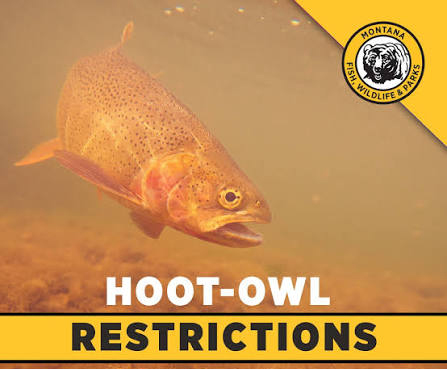

As you know, over the last two months, Fish, Wildlife & Parks (FWP) sought public input on preliminary proposals for the 2027–2028 fishing regulations and ideas for additional regulation changes. FWP uses a two-year fishing regulation cycle, with the fishing regulations booklet printed in odd-numbered years and interim changes posted online and shared through other outreach.
The regulation-setting process for the 2027–2028 fishing regulations began this spring with public scoping, during which FWP is asking for feedback on proposals the department has developed and additional suggestions from the public. Staff will use this initial input to refine a regulation proposal package that will be released for a second public comment period in August before going to the Fish and Wildlife Commission for final consideration at its fall 2026 meeting in October.
The Fishing Outfitter Association of Montana (FOAM) provided comments on FWP’s 41 proposed fishing regulation changes (available here). We will see FWP’s revised fishing regulation proposals prior to the Fall Fish and Wildlife Commission meeting and additional public comment can be provided to the Commission at their October meeting.

Join the Clark Fork Coalition on Wednesday, July 22 from 6:00-8:00PM at the Confluence Center in downtown Missoula for a moderated discussion on the past, present, and future of river recreation in the Missoula Valley.
Panelists representing five of the six Missoula River Ambassador partner agencies and organizations will explore how this public-private program is taking an unconventional, collaborative approach to protect river health, improve public safety, and inspire a curiosity-driven culture of care for local rivers and streams. (ASUM Transportation, the sixth program partner, was invited but unfortunately not able to attend the event.)
Panelists
- Randy Arnold – Director of Lands, Culture and Recreation │ Missoula County
- Rad Watkins – Executive Director │ Missoula Conservation District
- Morgan Valliant – Associate Director, Ecosystem Services │ Missoula Parks & Recreation
- Ryan Schreiner – Lower Clark Fork Recreation Manager │ Montana Fish, Wildlife & Parks
- McKenna Flannigan – River Ambassador Coordinator │ Clark Fork Coalition
Come grab a brew, connect with fellow river enthusiasts, and join the conversation about the future of recreation and stewardship in the Missoula Valley. There is no cost to attend, but seating is limited—reserve yours by RSVPing today!

It’s great to enter into July with a little water. Rain state-wide has helped fill reservoirs and hold off fires. For the first time in years, we wrapped up June with no fishing closures or hoot owl restrictions. The weather now appears to be turning the corner. It’s getting hot and people are heading for the water.
Overall, boater numbers are down with 50,8000 inspections so far this year compared to 52,800 in 2025. The 4th of July weekend was BUSY with over 6,700 inspections. This was over 1,000 more inspections than the 4th of July weekend in 2025.
We are seeing an alarming number of new mussel populations popping up this year. In the last month new mussel detections have occurred in both Oregon and Saskatchewan. It’s more important now than ever that we all work together to hold the line against AIS.
AIS Update: June 2026:
Prevention / Watercraft Inspection:
- Over 50,800 watercraft have been inspected so far this season.
- 21 Mussel Fouled Watercraft have been intercepted to date with 8 of those occurring in the last two weeks. Notable interceptions include:
- 6/30: A boat dealer in Kalispell reached out to FWP raising concerns about a mussel fouled wakeboat that had come into the shop. FWP staff contacted the owner and organized a decontamination. The mussels were dead, but there were thousands attached. The boat owner had purchased the boat in Minnesota and brought it to Montana in November when inspection stations were closed. FWP trains and authorizes private businesses like this one through an MOU to provide inspections / decontaminations for ballast tanks, motors and more complex boats. These relationships help to identify and address boats like this one. (photo attached)
- 7/1: The Anaconda inspection station intercepted a mussel fouled wakeboat traveling from Minnesota to Georgetown Lake. FWP inspectors found hundreds of mussels as well as Eurasian watermilfoil hanging from the trailer that also had attached mussels. The boat was only out of the water for 4 days and the mussels were suspected to be viable. Inspectors decontaminated the boat, locked the boat to the trailer and FWP warden staff responded to ensure the boat would not launch. FWP Press Release
- Governor’s cup Walleye tournament at Fort Peck: FWP staff called all out-of-state contestants (over 120 individuals) to ensure participants were aware of Montana’s inspection-before-launch requirements and the required purchase of the AIS Vessel Prevention Pass. https://www.montanagovcup.com/
- 2026 station location and dates of operation can be found here: https://fwp.mt.gov/conservation/aquatic-invasive-species/watercraft-inspection-stations
- Inspection data from the 2026 season is posted on the Watercraft Inspection Dashboard (updated weekly): https://experience.arcgis.com/experience/e7e5c01c253741bb88af3a963940c92d
Early Detection:
- Over 450 AIS early detection samples have been processed so far this season with NO evidence of invasive mussels detected.
- Eurasian watermilfoil (EWM) at Nilan Reservoir (Augusta): EWM eradication at Nilan was initiated in 2021 through herbicide treatments then subsequent diver survey and removal. One EWM plant was found in 2024 and no plants were found in 2025. June surveys this year found no EWM. This is the only EWM population on the Rocky Mountain Front. Eradication efforts will continue in order to prevent downstream movement into reservoirs and irrigation infrastructure.
- If you are interested in hosting an AIS identification / early detection training / workshop in 2026, please reach out to Craig McLane for more information (cmclane@mt.gov)
Upcoming Events:
- September 23-25th: Western Regional Panel of the ANS Taskforce annual meeting. Sacramento, CA: https://westernregionalpanel.org/annual-meeting/
- November 3rd: Annual AIS Partner Meeting. Montana Wild, Helena, MT. Save the Date.
- November 4th-5th: Montana Invasive Species Council Summit, Montana Heritage Center. Helena, MT. Save the Date.
In The News:
- Western Regional Panel is accepting nominations for Best in the West aquatic invasive species professionals
- Mussel fouled boat intercepted in route to Georgetown Lake (photo attached)
- Illegal pike introduction in Livingston
- Oregon detects dead mussel in Prineville Reservoir
- New detection of mussels in North Dakota
- New detection of mussels in South Dakota
- New detection of mussels in North Texas
- Invasive mussels detected in Saskatchewan for the first time
- California confirms northern expansion of golden mussel in the Port of West Sacramento
- Tahoe intercepts another boat with golden mussels
- California Water Districts struggle with golden mussels
- California investing $6 million to address golden mussels