FOAMLine, Vol. 34, No. 5, October 2025
IN THIS ISSUE:
2026 FOAM Annual Meeting!
2026 Guiding for the Future
Outfitter Endorsements on Guide License Renewals
Angling in Montana Brings Over $1 Billion Annually
3 Flies on 1 Line: Illegal in Montana
2026 FOAM Annual Meeting!

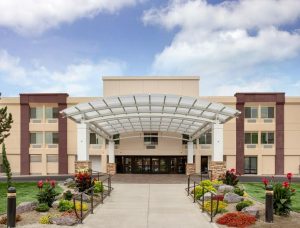
The 2026 FOAM Annual Meeting will be Friday and Saturday, 6 and 7 March, 2026, at the Holiday Inn Downtown in Missoula.
As usual, Friday, 6 March, will be the FOAM Board of Directors meeting; all members are welcome.
The Holiday Inn Downtown will be providing us a great deal on rooms for the event.
Saturday, March 7th, will be our 2026 Annual Meeting. The 2026 FOAM Annual Meeting will include speakers, vendors, raffles, beer –, lunch, and snacks, with all proceeds going to help FOAM’s Conservation Fund and G4F.
We’re very excited at this year’s raffle boat, a 2026 RioCraft Madison raft with a Montana Raft Frames raft trailer! Tickets will be available soon with all proceeds going to help FOAM’s Conservation Fund and G4F.
Hope to see you there!

2026 Guiding for the Future!

Outfitter Endorsement Now Required for Guide License Renewals
During the 2025 Legislative Session, the Montana Legislature passed Senate Bill (SB) 183, impacting the Board of Outfitters. This law now requires that guides renewing their license must be endorsed and recommended by an outfitter with a valid license.
Beginning November 1st, 2025, all guides must have their application for renewal endorsed by a qualifying outfitter. Guides without endorsement from a qualifying outfitter will not be permitted to renew until a qualifying outfitter endorses their application for renewal. If the guide license is not renewed after two years, the license will be terminated.
Guides and endorsing outfitters should communicate with each other about this new process. Prior to the guide renewal period, all endorsing outfitters will receive an email reminding them to endorse the renewals of the guides they employ or contract with. For instructions on how to endorse guides through your public user account on our Citizen Portal, see the directions document.
Outfitters using the services of guides that will be renewing their license should log into their public user account on the Board of Outfitters’ Citizen Portal.
- Proceed to the “All Other Options” button at the bottom of their license page, and click the “Guide Approval Amendments” button and “Continue.”
- Under “Service of Process” answer all questions as “Yes” and “Continue.”
- Under “Guide Renewal Approval,” click “Add Row,” and for all the guides you are endorsing, list the Guide License Number, Guide Name, and whether or not you endorse them as “Approved.”
That’s it for outfitters. Outfitters will see a list of endorsed or approved guides on their citizen portal page. Guides renewing their license will receive an email stating that they were endorsed by a licensed outfitter and they may renew their guide license. Guides that are renewing their license, and have not been endorsed by a qualified outfitter, will need to work with their outfitter to receive an endorsement.
If you have any questions, please contact the Board of Outfitters at DLIBSDOUT@mt.gov or call (406) 841-2244.
Angling Brings More Than $1 Billion to Montana’s Economy
Montana is famous around the world for its rivers and lakes, and it turns out that angling in the Big Sky state has a sizable economic impact.
A recent study from the University of Montana, Bureau of Business and Economic Research (BBER) and Montana Fish, Wildlife & Parks shows that in 2024 more than 450,000 resident and nonresident anglers spent a combined $1.27 billion on fishing trips in Montana.
“Montana’s amazing angling opportunities are no secret, but this research shows just how important fishing is to communities and businesses around Montana,” said FWP Director Christy Clark.
The BBER study found that cold water fishing (primarily for trout) accounted for most economic activity, which was generated primarily from nonresidents. Cold-water fishing generated about $1.1 billion in trip-related expenditures. More than 70 percent of the cold-water fishing expenditures came from nonresident anglers.
While the total economic output was lower for warm-water fishing, it still supports steady economic activity on a more local level. Warm-water species include northern pike, walleye and bass. Angling for these species generated more than $170 million in expenditures, with two-thirds of that coming from Montana residents. These trips are typically more frequent and localized, making them an important economic driver for rural communities that may not see other tourism activities.
“The large economic impact of fishing reflects the high quality of Montana’s fishery resource and related services,” according to BBER Director Jeffrey Michael. “The biggest spending categories are accommodations, outfitters and guides, and restaurants, which support thousands of Montana jobs.”
The survey was administered to a sample of adults (18 years of age or older) who purchased a Montana fishing license during the 2024 season. Survey respondents were asked to report the number of trips they took, the types of water bodies fished, species targeted, and the number of days spent fishing. They also provided detailed spending information related to travel, lodging, food, guides, equipment, and other trip-related expenses. The survey was conducted from November 2024 to May 2025. These selected participants were mailed a survey. Nearly 1,200 people completed the survey.
Trip and expenditure results from the survey were also incorporated into economic modeling to estimate the number of jobs created, personal income generated, value-added contributions to the state economy and total economic output from cold-water and warm-water fishing.
The study found the following:
Cold-water Fishing
Cold-water fishing generated $1.1 billion in trip-related expenditures and:
Supported 14,355 jobs
Generated $385.3 million in personal income
Contributed $828.4 million in value-added
Resulted in $1.35 billion in total output
Nonresidents accounted for more than 70 percent of cold-water-related spending.
Warm-water Fishing
Warm-water fishing generated $170 million in trip-related expenditures and:
Supported 1,623 jobs
Generated $41.9 million in personal income
Contributed $90.7 million in value-added
Resulted in $147.6 million in total output
Two-thirds of warm-water spending came from Montana residents.
View the full report here.
The Bureau of Business and Economic Research is a research center located in UM’s College of Business. BBER researchers engage in a wide range of applied research projects that address different aspects of the state economy, including survey research, economic analysis, health care research, forecasting, wood products research and energy research. For more information visit bber.umt.edu or call 406-243-5113.
3 Flies on 1 Line: Illegal in Montana
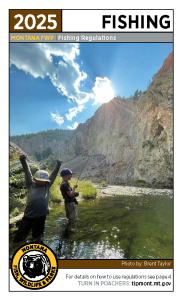
This year some guides and outfitters in Montana have been using 3 flies on their lines, generally consisting of a dry and two nymphs dropped. This is illegal.
In Montana, our Fishing Regulations are divided by three districts, Western, Central, and Eastern. The Western and Central districts have the same hook and line limits. Hook and line limits in the Eastern District in Montana are different.
Western and Central Districts Hook and Line Limits
Open Water
Rivers and Streams
1 line with 2 hooks per line, with or without a rod. The rod or line must be attended and, in the angler’s immediate control.
Lakes and Reservoirs
2 lines with 2 hooks per line. All lines must be attended and, in the angler’s immediate control.
Ice Fishing Lakes and Reservoirs
2 lines with 2 hooks per line on all lakes and reservoirs open to fishing. When a line is used through the ice, the angler need not be in immediate control but must be in the vicinity and in visual contact with the line.
A hook is a single, double, or treble point attached to a single shank or an artificial lure.
An artificial lure is defined as any item designed to attract fish. These include, but are not limited to, flies, hard plastic or wood lures (stick baits and plugs), soft plastic imitations, metal spoons, lead head lures, bladed lures, spinners, and spinner baits. Artificial lures are considered single devices regardless of the number of hooks. A lure with multiple hooks may not be connected to another lure.
Exceptions
Check the list of waters for the body of water you intend to fish in the district in which you are fishing. If the body of water is not found in the listing of Exceptions, all of that district’s standard seasons, daily/possession limits, and standard regulations apply. Standard regulations apply for species not listed in the Exceptions.
There are some specific rivers and sections of rivers that have more restrictive regulations — for example the Mainstem Flathead River (and other reaches), or portions of the Big Hole and Beaverhead rivers, require single-pointed hooks only — but none that are less restrictive.
Eastern District
Hook and Line Limits
Open Water
Rivers and Streams
6 lines with 6 hooks per line. The line(s) must be attended and in the angler’s immediate control unless they are used as setlines.
Lakes and Reservoirs
2 lines with 2 hooks per line or as noted under Exceptions to Standard Regulations. All lines must be attended and, in the angler’s, immediate control unless they are used as setlines.
Ice Fishing: Lakes, Reservoirs, Rivers and Streams
6 lines with 2 hooks per line through the ice. When a line is used through the ice, the angler need not be in immediate control but must be in the vicinity and in visual contact with the line unless they are used as setlines.
Again, there are some specific rivers and sections of rivers that have more restrictive regulations. As licensed professionals, we are responsible for knowing the fishing regulations for the waterbodies we fish. Read and understand the fishing regulations.